
The Arrival of “Margiris” in Nouadhibou… When One of the World’s Most Dangerous Fishing Vessels Knocks on the Door of Mauritania’s Marine Wealth
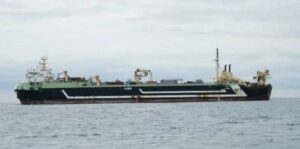
The docking of the giant fishing vessel Margiris at the port of Nouadhibou was not an ordinary event. It was more like a loud alarm bell ringing in the face of one of Mauritania’s most vital national assets: its sea. This ship, classified as the second-largest fishing vessel in the world, is not just a floating piece of steel, but a floating factory capable of emptying the ocean silently and at astonishing speed.
At nearly 143 meters in length and with a capacity exceeding 6,200 tons, Margiris possesses technological power that allows it to catch and process around 250 tons of fish per day—equivalent to the combined output of dozens of traditional fishing boats. This enormous disparity in capacity makes it, in the eyes of environmental experts, more a tool of overfishing than a means of sustainable exploitation.
The ship is no stranger to controversy. It was banned from Australian waters in 2012 following massive environmental protests, and was later driven away from the coasts of Ireland and Britain under pressure from public opinion and environmental organizations, because of the damage it causes to fish stocks and the disruption it creates in marine ecosystems.
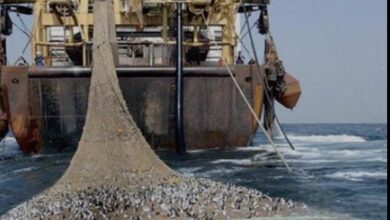
The danger lies not only in the quantity it harvests, but also in the type of life its massive nets sweep up: large and small fish, mature and juvenile alike, in a single haul. This effectively destroys the natural reproduction cycle, turning the sea into a rapidly depleted field, and leaving thousands of Mauritanian fishermen facing a bleak future without livelihood or resources.
While the mere presence of the ship in the port is not in itself a legal violation, the real concern begins the moment it enters fishing waters. A lack of transparency, weak oversight, or licenses granted behind closed doors could turn this visit into a full-scale environmental and economic disaster.
Mauritania’s marine wealth is not a fleeting prize—it is a pillar of food security and the inheritance of future generations. Allowing ultra-powerful vessels like Margiris to operate without strict constraints means opening the door to the organized plunder of a sea that has no voice to defend itself.
Today, more than ever, public opinion deserves clear and transparent answers:
What is the exact mission of this vessel?
What are the limits of the license granted to it?
And who is monitoring what its nets extract from the depths of Mauritanian waters?
Because silence here is not neutrality—it may well be indirect participation in emptying the sea of its life.