
A Dialogue Without Purpose: When Party Meetings Become a Waste of Time
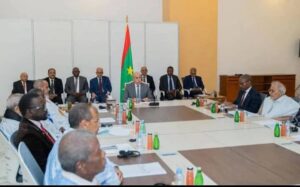
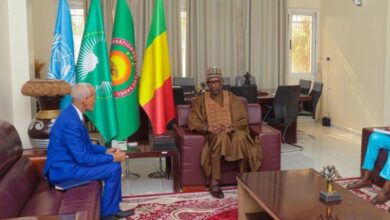
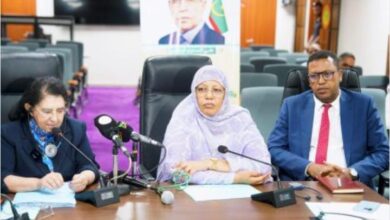
In a scene that repeats itself with every political milestone, President Mohamed Ould Cheikh El Ghazouani met this Thursday afternoon with around forty political figures representing parties from both the ruling coalition and the opposition, under the banner of preparing for the “upcoming national dialogue.”
However, for many observers, this meeting is nothing more than another round in a series of formal dialogues whose limited usefulness has been proven over time, turning them into a political time-wasting exercise rather than a genuine avenue for solutions.
Among the dozens of parties involved, no more than five are actually represented in parliament, while the vast majority of participating parties lack any real popular presence or significant electoral weight. This raises a fundamental question about the purpose of involving parties without grassroots support in discussions that are supposed to shape the country’s political future.
According to the announced arrangements, twenty seats were allocated to opposition parties, half of them to the Democratic Opposition Institution, with limited representation distributed among parties such as “Tawassoul,” “Joud,” and “Al-Sawab,” in addition to seats for parties not represented in parliament and newly licensed formations. Critics argue that this distribution does not reflect the real balance of power on the ground but rather demonstrates the authorities’ desire to expand the circle of formal participation without ensuring genuine representation of citizens’ will.
Sources indicate that the meeting was dedicated to presenting approaches regarding the dialogue’s themes, mechanisms, and scheduling, in preparation for its official launch in the near future. But according to observers, the problem does not lie in the mechanisms or topics, but in the absence of genuine political will to turn any dialogue into binding decisions and real reforms.
The country’s fundamental problems—ranging from governance crises, deteriorating economic and social conditions, rampant corruption, and weak social justice—are apparent to everyone and do not require new dialogue tables to be diagnosed. What these issues need is sincere political will, courageous choices, and the ability to move from crisis management to actual solutions.
However, according to critics, the current regime seems to have chosen to perpetuate crises instead of addressing them, producing consumable political processes rather than opening a path for real reform. In this reality, the “national dialogue” remains merely a vague title, summoned as needed, without touching the roots of problems or changing a reality that continues to grow more complex.