
After a Month at Sea: Missing Boat in the Atlantic with 300 Migrants Feared Lost
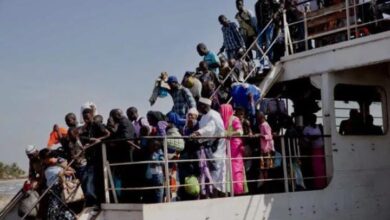
Radio France Internationale (RFI) has revealed the disappearance of a wooden pirogue carrying nearly 300 undocumented migrants, more than a month after it departed from the Gambian coast on a perilous journey toward Spain’s Canary Islands. According to the same source, the boat was last seen on December 6—just one day after its departure—off the coast of the Senegalese city of Joal, where a fisherman recorded a video showing the overcrowded vessel battling rough seas, in a scene foreshadowing an imminent disaster.
The boat was carrying dozens of young people from Senegal, Gambia, Mali, and Guinea, all driven by the dream of reaching Europe via one of the world’s most dangerous migration routes: the Atlantic Ocean.
In Dakar, Mamadou Mignane Diouf, coordinator of the Senegalese Social Forum and the Migration, Freedom of Movement, and Right to Asylum Platform, called on regional and international authorities to immediately launch extensive search operations for the missing boat and its passengers. He noted that such journeys usually take no more than seven to ten days, adding that the availability of radars, aircraft, and ships in the region raises troubling questions about why the boat was not detected or its occupants rescued in time.
According to RFI, tighter security surveillance around Dakar has pushed human smuggling networks to move departure points further south, toward Gambia and the Saloum Islands, lengthening journeys and increasing the risk of boats getting lost at sea or sinking in the open Atlantic.
For his part, Sallio Diouf, president of the Senegalese migrant rights organization “Boza Fi,” placed much of the blame on strict security policies, criticizing what he described as the absence of humanitarian search-and-rescue resources in the Atlantic. He argued that existing surveillance systems are used to deter migrants rather than to save lives.
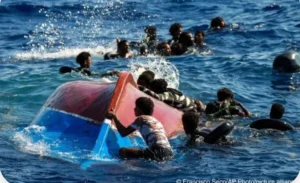
This tragedy comes amid an unprecedented rise in irregular migration attempts along the Canary Islands route, one of the deadliest paths toward Europe, with thousands of boats attempting the crossing each year from the coasts of West Africa and Morocco. According to the organization Caminando Fronteras, more than 1,900 people lost their lives in 2025 alone.