
Mauritania… Abundant Wealth, Deferred Development
In many countries around the world, the abundance of natural resources is seen as a historic opportunity to achieve development and prosperity. However, in Mauritania, the picture appears more complex. A country rich in mineral, marine, and energy resources continues to suffer from high poverty rates, fragile infrastructure, and basic services that fall short of its citizens’ aspirations.
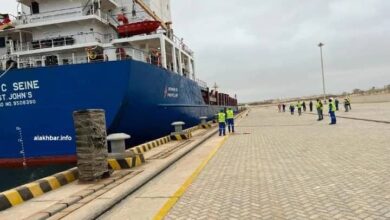
Mauritania is not a resource-poor country; rather, it is rich in iron, which leaves its mines on long trains heading to ports, and in marine wealth considered among the richest in West Africa. It also possesses significant reserves of gold and copper, in addition to promising prospects in gas and energy. Moreover, the country has, for years, received considerable financial support from international and regional institutions, as well as grants and aid from international partners.
Despite this diversity of resources, it has not been adequately reflected in citizens’ living standards or in development indicators. Many citizens still struggle to access quality healthcare, education capable of preparing future generations, or stable job opportunities that ensure a minimum standard of decent living.
This raises a fundamental question:
Why have these resources not become a true driver of development?
Comparative experiences reveal that the issue in such cases usually lies not in the scarcity of resources, but in how they are managed. Weak governance, poor management, and the absence of long-term economic planning can turn natural wealth from a blessing into a burden. When resources are managed without sufficient transparency, or without a clear link between their revenues and investment in human development and infrastructure, their developmental impact remains limited.
Economies heavily dependent on exporting raw materials face another challenge: lack of economic diversification. A country may export iron, fish, or gold in raw form, while the added value—through processing, manufacturing, and employment—is realized elsewhere. As a result, job opportunities and investments leak out of the national economy.
Meanwhile, local economic debates sometimes seem to revolve around marginal solutions, such as imposing limited taxes on small activities, while the larger questions—those concerning the management of strategic resources, the allocation of their revenues, and the strengthening of transparency and accountability—still require deeper discussion and bolder reforms.
The relationship between poverty and underdevelopment in Mauritania cannot be separated from the challenges of economic governance. Natural resources alone do not create development unless they are managed within a clear vision that prioritizes investment in education, healthcare, and infrastructure, and fosters a productive economy that creates jobs and promotes fair distribution of wealth.
Ultimately, Mauritania is not a country lacking potential. It is a country with enough resources to set it on a different development path. However, turning this potential into tangible reality requires, above all, sound management of wealth, strong institutions, and economic policies that place the citizen at the heart of the development equation.
True wealth in any country is not measured only by what lies beneath the الأرض or in the depths of the sea, but by how it reflects on people’s lives. The moment resources translate into better schools, efficient hospitals, and job opportunities for youth, we can finally say that wealth has found its way to the people.
Mohamed Abderahmane Ould Abdallah
Journalist and writer – Nouakchott
medabd388@gmail.com