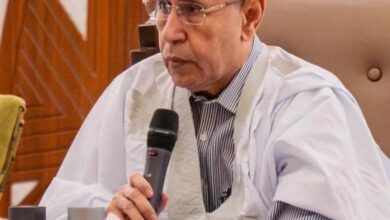

Factional Rivalries and Succession Ambitions: Is Ould Ajay Preparing the Ground for the Post-Ghazouani Era?

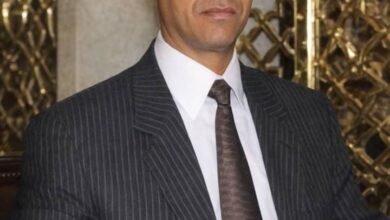
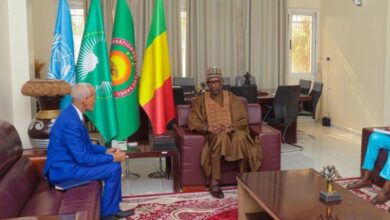
Behind the scenes of power, meetings held outside official offices are rarely accidental, nor are they conducted away from institutional oversight without objectives that go far beyond a “friendly discussion.” Reports surrounding the meeting between former captain Ould Bouhbini and Mauritania’s Prime Minister Mokhtar Ould Ajay place us before a political landscape where personal ambitions intersect with factional struggles at a sensitive moment in the life of the regime.
According to circulating accounts, the meeting was not a routine administrative encounter but rather resembled a closed political briefing, during which Ould Ajay reportedly presented what he described as his “reform project,” speaking of internal obstacles while criticizing rival factions within the ruling establishment. The central question, however, remains: was the objective to convince his guest of the merits of reform, or to recruit him into an early positioning battle within the system?
Many observers believe that Ould Ajay’s recent political moves cannot be separated from a broader ambition — widely discussed in political circles — to present himself as a potential successor to President Mohamed Ould Ghazouani in a post-mandate phase. If accurate, this ambition could explain the sharpness of his rhetoric toward internal rivals and his efforts to build networks of political and media support.
Yet the greatest challenge facing such a trajectory lies in the Prime Minister’s public image. His recent tax policies have drawn widespread criticism from traders, segments of the middle class, and economic actors who view them as burdensome fiscal measures imposed during an already difficult economic period. Public debate increasingly features accusations from critics portraying him as the continuation of a financial approach insufficiently attentive to social vulnerability — a perception that, according to detractors, has widened the trust gap between the government and large segments of society.
Moreover, some opponents place his name among figures associated with a previous political era frequently accused in public discourse of corruption and mismanagement. While no judicial rulings have personally convicted him, the persistence of such associations in the public imagination represents a significant political liability for any future presidential ambition.
The reported inclusion of additional figures in the meeting — alongside public praise of his policies before the guest — has been interpreted as a form of symbolic pressure: align with the emerging power center or remain outside its circles of influence. To critics, this reflects a reality in which internal competition within the regime is no longer concealed but is gradually evolving into an early contest over potential succession.
Ultimately, whether these movements constitute genuine preparation for a post-Ghazouani political battle or merely an internal reshuffling within government ranks, Ould Ajay’s greatest challenge may not lie with rivals inside the system, but with public opinion itself. Internal power equations may be settled through political balances, but legitimacy is determined by public trust and perception. Any future presidential ambition that fails first to rebuild that trust will remain a high-risk project, regardless of internal calculations of power.