
Russia, Azawad, and the Battle for Influence: Why Has Kidal Become the Knot of the Conflict?
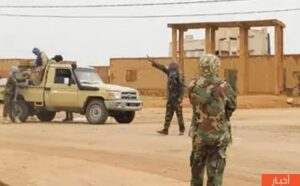
The recent statements issued regarding the city of Kidal reveal an extremely dangerous dimension of the escalating crisis in Mali. The confrontation is no longer limited to military battles alone; it has evolved into a psychological and media war in which all parties are trying to impose their own narrative on both domestic and international audiences.
The Russian corps’ attempt to downplay the strategic importance of Kidal after losing control over it does not appear to be merely a military assessment. Rather, it reflects clear concern over the political and psychological consequences of the city falling outside the control of Bamako and its allies.
Acknowledging that Kidal represents the “key to the north” implicitly means admitting the central government’s inability to secure one of the most symbolic and historic regions for the Tuareg people. It also places the Russian presence in the Sahel under a difficult test, especially after Moscow presented itself as a force capable of restoring stability and crushing armed rebellions.
More dangerously, Russian rhetoric has begun shifting from the language of “military decisiveness” to discourse centered on “managing attrition” and “avoiding traps.” These are indications of a growing awareness of the complexity of the security landscape in northern Mali, where armed groups possess extensive experience in desert warfare and maneuvering through the rugged terrain of the Adrar des Ifoghas mountains.
Despite attempts to minimize the city’s importance, Kidal remains strategically and psychologically significant because, for the Azawad movements, it symbolizes a political and historical aspiration for self-rule. Control over the city also provides these groups with a powerful bargaining chip in any future negotiations.
What is happening today in northern Mali sends alarming messages to all Sahel countries, because the continuation of chaos and division could open the door to a new wave of regional instability, especially with the growing activity of extremist groups, smuggling networks, and the flow of weapons across fragile desert borders.
For Mauritania and neighboring countries, the danger does not lie only in the ongoing battles inside Mali, but also in the possibility that their security and ethnic repercussions could spread throughout the region, given the fragility of borders, the vastness of the desert space, and the difficulty of monitoring it.
If the conflict continues at this pace amid international competition and conflicting regional interests, the Sahel region may be pushed into a far more complicated phase, in which Malian territory turns into an open arena of attrition that threatens not only Mali’s unity, but also places the security of the entire region before unprecedented challenges.