
Modernizing Nouakchott” … A Project Swallowing Public Funds Without Changing the City’s Reality
elitihad – Nouakchott
The statements made by former Mauritanian diplomat Seydati Ould Ahmed Aicha were not merely passing remarks about the “Modernizing Nouakchott” project. Rather, they appeared to be a direct political and administrative indictment of a governmental reality suffering from a deep gap between official rhetoric and the daily reality experienced by citizens.
The man, who spent decades within state institutions and the diplomatic corps, returned after months away only to find that the capital — despite billions having been spent on it and despite the justifications offered by Ould Ajay — had not transformed into the modern city that had been promised. Instead, according to his description, he found a project raising serious questions about the scale of waste, mismanagement, and the absence of oversight regarding public funds.
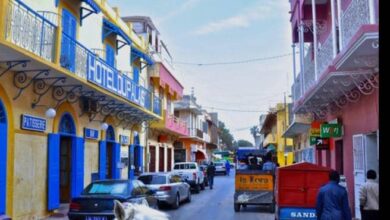
The crisis of “Modernizing Nouakchott” is not limited to deteriorating sidewalks, streets that return to potholes after the first rainy season, or patchwork projects implemented without any genuine urban vision. The real crisis lies in the mentality governing development in Mauritania: a mentality driven by political propaganda instead of planning, and by image polishing instead of addressing the roots of the urban and social crisis.
Over recent years, the capital has turned into an open workshop for spending without tangible results felt by ordinary citizens. Urban chaos persists, garbage overruns neighborhoods, infrastructure remains fragile and deteriorated, traffic congestion continues to worsen, and poor districts still live outside the very concept of “modernization,” which is promoted more as a media slogan than as a genuine development project.
What was particularly striking in the former ambassador’s remarks was his attempt to distinguish between what he considered the “diplomatic successes” of President Mohamed Ould Cheikh El Ghazouani and the government’s domestic performance, arguing that governments bear direct responsibility for citizens’ daily suffering. Yet this argument itself raises a larger question:
Who holds these governments accountable? And who allows them to continue despite their repeated failures?
In systems founded on good governance, public projects do not become mere showcase displays, nor are citizens left hostage to an incompetent administration, entrenched corruption, and tribal favoritism controlling contracts, appointments, and implementation.
What Mauritania is experiencing today is not merely a crisis of projects, but a crisis in the management of the state itself. When responsibilities are assigned according to loyalty, kinship, and patronage rather than competence, the natural outcome is stalled projects, wasted budgets, and citizens who have lost confidence in all official slogans.
Furthermore, the fact that a figure with the stature and experience of Seydati Ould Ahmed Aicha has emerged with such rhetoric after years representing the state abroad reveals the depth of frustration even within the official elite itself. It confirms that criticism is no longer confined to the opposition or the street, but is now also coming from figures who were once part of the system and its institutions.
More alarming is his talk about “combating corruption and strengthening the state,” which suggests that he understands from the inside the scale of dysfunction eating away at public administration and state finances — dysfunctions that are no longer hidden from anyone amid the spread of corruption, widening social inequalities, rising unemployment, deteriorating public services, and the continuation of massive spending on projects consumed by corruption or poor planning.
Any talk about “Modernizing Nouakchott” will remain meaningless as long as the same governing mentality remains unchanged, and as long as governance continues to be based on political and tribal appeasement rather than competence, transparency, and accountability.
Capitals do not become modern through billboards and publicity campaigns, but through building a state that respects its citizens, holds officials accountable, protects public funds, and makes development a reality people can see in their daily lives — not merely slogans consumed in official speeches.