elitihad – Nouakchott
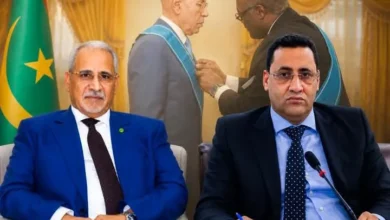
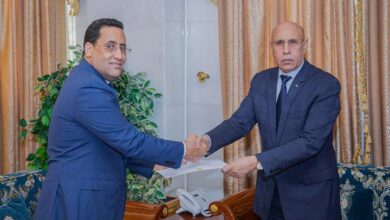
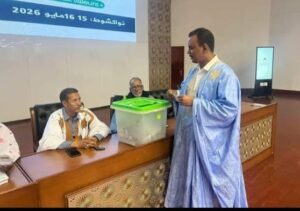
The elections organized today within the Mauritanian Journalists’ Union have sparked widespread controversy in media circles, following the boycott by the majority of influential journalistic blocs, amid direct accusations against the Minister of Communication, El Houssein Ould Meddou, of orchestrating and imposing a “one-sided and manipulated” electoral process lacking the minimum standards of legitimacy and transparency.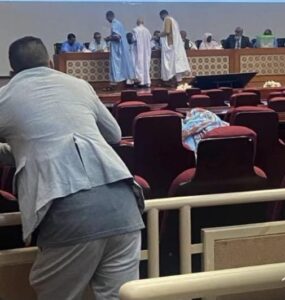
The electoral conference witnessed a remarkably weak turnout and several hours of delay before its opening session, in a scene that journalists described as reflecting the scale of rejection facing the current process within the media community, especially after three major journalistic blocs announced a complete boycott of the elections: the Journalistic Solidarity Bloc, the Hope Bloc, and the Salvation Bloc.
The boycotting groups insist that these three blocs represent nearly 80% of professional journalists in the country, arguing that what took place today “cannot be described as genuine elections,” but rather “an attempt to impose a union leadership loyal to the authorities through sham elections whose results had been predetermined.”
According to union sources, the number of attendees and voters did not exceed 100 people, a figure that the boycotting parties say strips the conference of any legitimacy, particularly since the union’s internal regulations require the presence of more than one-third of members for elections to be legally valid — a minimum of 570 members.
Journalists argue that this fact alone is sufficient to invalidate the electoral process, stressing that ignoring the union’s legal framework reveals a deliberate attempt to push through a single list with official backing instead of organizing fair and transparent professional elections that truly reflect journalists’ will.
The boycotting blocs accused the Minister of Communication of directly interfering in the electoral process by supporting one faction and supervising an election “devoid of independence,” with the backing of some directors of state-owned media institutions. They described this as a “dangerous deviation” that transforms the union from an independent professional body into an instrument subordinate to the executive authority.
Boycotting journalists stressed that the current crisis goes beyond competition over positions, exposing instead the deep structural problems affecting the media sector, including the continued marginalization of journalists, the absence of genuine reforms, and the exploitation of the union for political and personal interests.
Observers also warned that imposing elections lacking the minimum requirements of consensus and legal legitimacy would deepen divisions within the journalistic community and further erode the union’s credibility and role in defending journalists’ rights and professional interests.
The boycotting parties maintain that any genuine reform must begin with removing executive interference from union affairs, respecting the laws governing the profession, and organizing transparent and pluralistic elections capable of ensuring real representation for journalists, rather than reproducing what they describe as a system of “domination and exclusion.”
Amid this tense atmosphere, the elections held today appear more likely to entrench a new crisis within the union rather than serve as an opportunity to restore trust and rebuild the Mauritanian journalistic community.