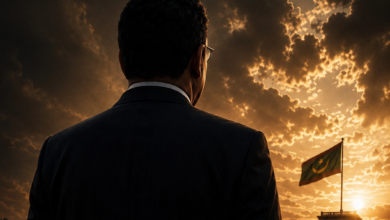

How Backwardness Became a Collective Creed and Helplessness a Way of Life

By: Mohammed Abderahman Ould Abdallah
Journalist and Writer
medabd388@gmail.com
■ if the tragedy of
underdeveloped societies were merely poverty, poverty could be fought. The same applies to weak resources; many nations have risen from the ashes despite scarcity. The real tragedy begins when backwardness itself turns into a “collective conviction,” and when defending the causes of collapse becomes a form of social devotion, loyalty to identity, or protection of tradition. At that point, society enters a stage more dangerous than material underdevelopment: the paralysis of the collective mind.
In Mauritania, the crisis appears deeper than a mere economic imbalance or developmental weakness; it is a deeply accumulated civilizational crisis of consciousness that has led large segments of society to coexist with mediocrity until they have grown accustomed to it — and at times even celebrate it as part of their “authenticity.” Thus, what should have been subject to criticism and reassessment is transformed into a symbol of pride and belonging.
The problem is not traditional clothing, nor nomadism as part of history and culture; every nation has its own heritage. The disaster begins when traditions are used as an excuse to reject change, or when laziness becomes a social virtue, dependency a way of life, and productive work something secondary, while people of empty appearances are granted greater status than those of competence and knowledge.
A society trapped in a crisis of collective consciousness fears criticism more than it fears poverty. That is why any attempt at diagnosis or self-examination is often met with accusations and fanaticism — not necessarily because the criticism is wrong, but because society has become accustomed to fleeing from confronting itself. Instead of acknowledging the structural flaws in education, culture, administration, and social relations, many prefer to hide behind emotional slogans and exaggerated self-glorification, as though denial alone could alter reality.
One of the most dangerous afflictions of underdeveloped societies is the loss of sensitivity toward public ugliness. People become accustomed to chaos, filth, poor services, corruption, and unemployment as though they were natural conditions. Over time, a new generation emerges that no longer finds collapse shocking, because it was born within it; ruin simply becomes part of the ordinary daily landscape.
Mauritania’s crisis is not merely a crisis of the state, but also a crisis of society itself. Any political system — no matter how corrupt or dysfunctional — does not grow in a vacuum. It always finds a social environment that enables its survival: a culture of flattery, submission to tribal influence, contempt for competence, fear of confrontation, and the sanctification of individuals instead of respect for institutions.
For this reason, any genuine project of renaissance cannot begin merely by changing political faces, but by rebuilding the Mauritanian individual psychologically, culturally, and intellectually. It begins with liberating the mind from social superstition, from the mentality of surrender, and from the illusion of superiority that conceals deep internal fragility.
Nations do not progress simply because they possess wealth, but because they possess the courage to admit their mistakes. True renaissance is not born from endless self-praise, but from honest criticism — sometimes harsh criticism. A society that refuses to see its own flaws is condemned to reproduce them endlessly.
Perhaps the greatest tragedy is that many people still confuse dignity with denial, when in fact the first step toward dignity is acknowledging that there is a profound defect that must be repaired, not disguised with words and slogans.