
Nouakchott… The Capital of Darkness!
By:Mohamed Abdelrahman Ould Abdallah
medabd388@gmail.com
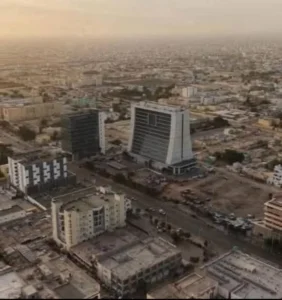
When you visit capitals around the world, you are welcomed by lights. The streets speak of the state’s prestige, and the infrastructure reflects the extent to which governments respect their citizens. But when you enter Nouakchott, you are likely to experience a great shock. You are not entering the capital of a country rich in gas, iron, gold, and fisheries; rather, you are entering an exhausted city drowning in darkness, as though it has just emerged from a natural disaster or a prolonged war.
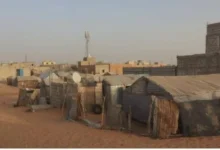
It is ironic that, in the twenty-first century, Nouakchott remains one of the capitals most deprived of public lighting. Entire neighborhoods turn into desolate spaces after sunset, filled with potholes, plagued by crime, littered with garbage, and suffocated by neglect. The ordinary citizen has become accustomed to walking through darkness, avoiding broken roads while searching for a drop of water or a temporary sense of security.
What kind of “modernization” is this that a government plagued by corruption and authoritarianism speaks of? What sort of progress can be promoted for a city whose neighborhoods suffer from water shortages, power outages, lack of sewage systems, accumulating waste, and the absence of urban planning? Official talk of the “modernization of Nouakchott” has become little more than a source of public ridicule, because reality exposes the vast gap between the government’s rhetoric and the daily lives of its people.
The capital has become a massive showcase of administrative failure, corruption, and poor governance. Billions are spent on questionable projects and corrupt deals, yet citizens see nothing but further decline and underdevelopment. Roads are occasionally patched up, streetlights stand without illumination, water networks fail to meet basic needs, and entire neighborhoods appear as though they lie beyond the reach of the state.
The painful irony is that the authorities and their supportive media outlets attempt to portray the situation as though the country is experiencing a major urban renaissance, while the truth is that Nouakchott has become a symbol of official neglect. The capital, which should serve as the state’s mirror, has instead become living evidence of a governance crisis, failed public policies, and an elite disconnected from the realities of ordinary citizens.
The tragedy of Nouakchott lies not only in the darkness that engulfs its streets but also in the political and administrative darkness surrounding its management. When accountability disappears, failure is rewarded, and contracts are awarded on the basis of personal connections and loyalty rather than competence and merit, the outcome is inevitable: a city without spirit, without services, and without a future.
Even more alarming is that this situation is no longer treated as a national crisis requiring urgent intervention but rather as a normal reality that citizens are expected to accept. It is as though the residents of the capital are expected to remain silent, endure neglect, and convince themselves that living in darkness, thirst, and deprivation is an unchangeable fate.
Today, Nouakchott is not merely a political capital; it is a harsh testimony to decades of broken promises and empty slogans. It is a city belonging to a wealthy state, yet its residents live with a daily survival mentality. A capital that encapsulates Mauritania’s great contradiction: immense wealth above the ground and beneath the sea, alongside urban poverty and failing public services that pursue citizens at every turn.