
Bouba and Errajel: A Humanitarian Crisis Victims of Influence and Social Silence
elitihad – Nouakchott
Not all crimes are committed with weapons. Some are committed through silence, and some forms of injustice carry deep sorrow without the need for prisons. All they require is a society afraid to confront the truth, and influence powerful enough to bury that truth whenever it comes close to emerging.
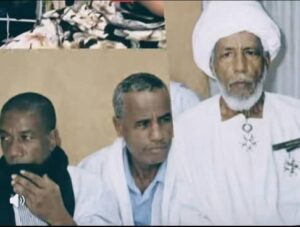
The case of Bouba and Errajel has long ceased to be merely a family dispute within a large social household. It has become a mirror reflecting one of the deepest crises within Mauritanian society: the crisis of justice when it collides with influence, and the crisis of human dignity when proving one’s lineage becomes a long battle against tradition, fear, social calculations, and the selective or misguided interpretation of certain religious texts.
These two men are not demanding power. They are not seeking to divide wealth, nor are they fighting for influence. According to those close to the case, all they wanted was recognition of their natural right to a name, an identity, and dignity. They simply wanted to tell society: we are human beings, not a mistake that must be hidden.
But it seems that some societies fear the truth more than they fear injustice.
The narratives surrounding the case speak of an old and complex relationship within one of the households of the family of Sheikh Sidya. Some have relied on particular jurisprudential interpretations tied to that relationship in order to deny the lineage claim, as though a scholarly disagreement had suddenly become a social death sentence imposed upon two individuals who had no choice in the circumstances of their birth.
Here lies the real tragedy.
The Islamic jurisprudence behind which some now hide was never this rigid or cruel. Classical Islamic legal texts are filled with more complex and intertwined cases, especially in chapters dealing with concubinage, slavery, and relationships that emerged within older social structures. Scholars differed widely on such matters, but they agreed on one essential principle: Islamic law leans toward affirming lineage, not denying it, because losing a person’s identity is more dangerous than any legal disagreement.
Yet what is happening in this case suggests that the issue is no longer truly jurisprudential. It has become political, social, and moral.
When one judge reportedly ruled in favor of establishing the lineage, it appeared for a moment that justice had finally chosen to stand with humanity. But soon afterward, the forces of silence and influence allegedly moved into action. The ruling was challenged, and observers of the case spoke of hidden pressures that eventually led to the judge’s removal and the closing of the case in a manner that raised more questions than answers.
This leads to a frightening question:
Is the judiciary truly independent when influential families are involved? Or does justice in Mauritania still recognize names that stand above the law?
The most dangerous aspect of this case is not its family details, but the message it sends to society: that the weak can be left suspended between doubt and silence for decades simply because the truth might disturb people of social standing.
This is precisely what makes the case deeply connected to the history of class inequality and disguised slavery within Mauritanian society. Relationships born under the old social order left behind children without recognition, women without protection, and a collective wound that society still refuses to confront.
Burying the case does not make it disappear. It merely allows the bleeding to continue in silence.
Moreover, the world has changed. Truth is no longer captive to contradictory narratives or social influence. Science today offers a decisive method that leaves little room for evasion: DNA testing.
And here emerges the most uncomfortable question of all:
If everyone is certain of their version of events, why fear scientific truth? Why does a simple DNA test become such a major threat?
The true value of respected religious and scholarly families is not measured by the number of followers they possess or by the prestige of their history, but by their ability to stand with justice when justice is painful — and by their willingness to confront the truth instead of burying it beneath the cloak of social silence.
The case of Bouba and Errajel is no longer merely a question of lineage. It has become a moral test for an entire society, and for a question larger than names or families:
Is a human being in Mauritania respected simply for being human — or only if he is powerful and protected by influence?
And the question that continues to haunt the collective conscience remains:
How many other people in this country have had their rights buried out of fear of the truth, and in favor of those with status and power?