
The ‘Taxation System’… Looting and Repression: Seven Lean Years under Ghazouani’s Rule and His Frontman Ould Ajay”
Mohamed Abdelrahman Ould Abdallah
Journalist and writer
medabd388@gmail.com
▪︎ It is no longer possible to beautify reality or evade the truth:
What Mauritania is experiencing today is the result of years of corruption, mismanagement, lack of vision, and the dominance of a ruthless corrupt system that sees the state merely as a خزينة to be plundered, and the citizen as nothing more than a taxpayer to be relentlessly drained.
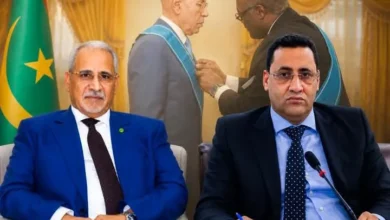
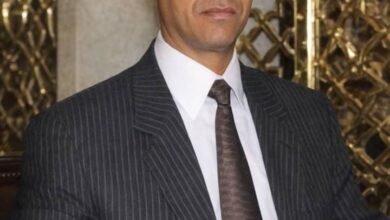
At the forefront of this scene stands Mokhtar Ould Ajay, one of the most prominent symbols of corruption (defendant number 7 in previous corruption cases), managing a policy of organized looting and harsh taxation. Under his tenure, taxes have turned into a tool of collective suffocation, imposed without fairness and without regard for people’s realities. These policies have touched every sector: from mobile phones to construction, from fines to the simplest daily activities. Taxes are imposed on everything—unjustly—burdening the poor before the rich and deepening inequality instead of addressing it.
But the disaster does not stop at taxation. The general budget, which should be an instrument for development, has in the eyes of many turned into an open arena for manipulation, no-bid deals, and inflated invoices. Funds are wasted, resources looted, with little to no impact on citizens’ lives. No достой infrastructure, no improving services, no projects delivered with the required quality. Everything suggests that public money is managed without real oversight or accountability. Those who plunder public funds are recycled and appointed to sensitive positions instead of being punished.
Alongside this bleeding, an unprecedented wave of rising prices is intensifying. Costs are soaring without limit, purchasing power is collapsing, and stagnant wages fail to meet even the minimum requirements of life. Citizens are being pushed toward helplessness, poverty, and deprivation, while all paths to hope and a decent life are being closed.
As for rights and freedoms, the picture is even darker. Violations of human dignity are no longer exceptions but recurring practices. Activists are thrown into prison, voices are silenced, and protests are suppressed. Scenes of forced demolitions of homes and abuse of women are no longer isolated incidents but stark expressions of a deep imbalance in the relationship between authority and society.
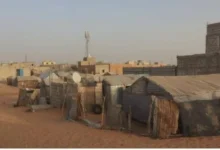
Seven lean years under Ghazouani’s rule have been enough to push the country backward. Youth migration is increasing as a result of a blocked horizon. Crime and drug use are spreading alarmingly amid weak deterrence and the absence of root-cause solutions. Basic services such as water, healthcare, and electricity are deteriorating; public lighting has been cut off from streets, and darkness has become a government policy.
At the heart of all this, the same faces and networks continue to control decision-making, as if the state has become hostage to narrow interests that see no further than their own gains.
What is happening today is not a temporary setback but a deep governance crisis reflected in every detail of daily life. A state that burdens its citizens with taxes while failing to protect or serve them is a state suffering from serious dysfunction. It requires a comprehensive review of its unjust and oppressive policies—not temporary patchwork or manipulation of public opinion.
Public frustration has reached its peak, and it is no longer acceptable for this authoritarian and crude approach—one that exhausts citizens and undermines what remains of trust—to continue. Nations are not built through taxation, not governed through repression, and not protected by silence in the face of corruption.